
My meticulously planned goblin ambush in the Whispering Woods became utterly irrelevant when my players decided to investigate the specific smell of burnt sugar emanating from the abandoned pie shop. Fumbling for my notes, I tried to invent a pastry-obsessed NPC with a secret, and drew a total blank. It was 8:17 PM. My campaign was adrift.
We often treat monsters like stat blocks, not characters. We see a "DND monster generator AI" and think "great, a button to solve this." AI, like any tool, needs a blueprint. We rely on generators because we’re afraid of making something that falls flat. We over-prep for the expected, not the possible. We over-prep because we're insecure, not because we have to. This insecurity manifests as a frantic search for a quick fix—a digital rubber stamp for creativity.
Here’s how to build monsters with intention. This works even when the dice roll sideways.
The Iceberg Three
This technique ensures every creature has three core elements. It creates potential for narrative, not just combat.
- Surface Feature: What do players see and hear immediately? This is a unique physical trait. It could be a distinctive vocalization. It might even be a peculiar habit.
- Driving Desire: What does this creature want? It doesn't need to be complex. Survival. Food. Warmth. Protection of its young. This is its "why."
- Critical Flaw: What is this creature's Achilles' heel? This could be a physical weakness. It might be an emotional trigger. It could be something it deeply fears. This is how players can interact beyond combat.
My secret fear is that they'll be boring. Players will just roll dice until it's dead. Then they'll ask what's for dinner. The Iceberg Three forces me to give them something to latch onto. It makes them feel like they’re interacting with a world. Not just a health bar.
Live at the Table: The Crooning Carrion Crow of Faelan’s Folly
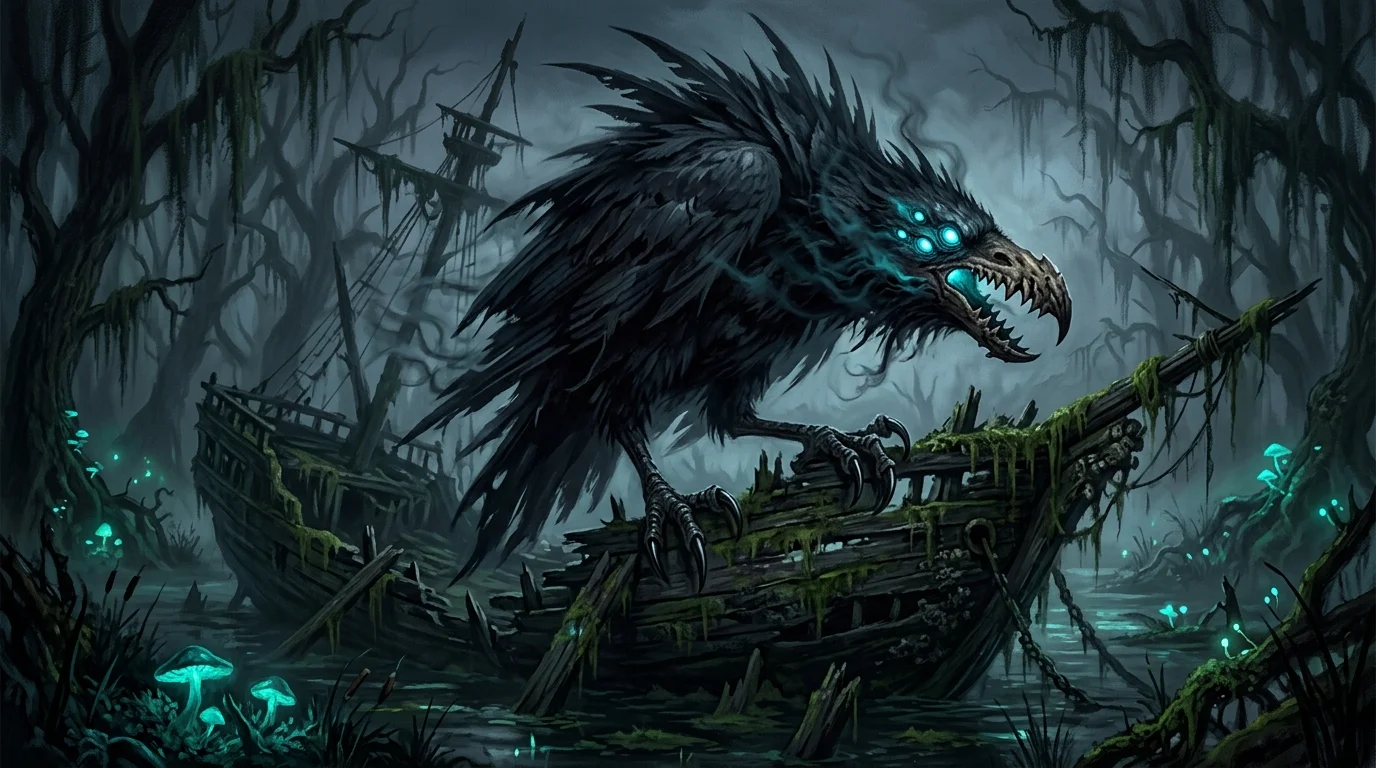
Let's say the party traverses Faelan’s Folly. This bog is known for its perpetually weeping willows. An unsettling, constant drone of unseen insects fills the air. They hear a low, mournful crooning. It seems to echo from the splintered timbers of a half-submerged shipwreck. Its figurehead is a leering gargoyle choked with moss.
- Creature: Crooning Carrion Crow
- Surface Feature: A massive crow. It's larger than any natural bird. Its iridescent black feathers shimmer with an unnatural, oily sheen. Its eyes glow with a faint, eerie blue light. It croons a melody that sounds uncannily like a lament.
- Driving Desire: It desperately tries to attract its lost fledgling. It believes the chick is trapped within the shipwreck’s hull. It's not inherently hostile. It's just a panicked parent.
- Critical Flaw: It is intensely territorial. Any perceived threat to the shipwreck will provoke an immediate, albeit predictable, attack. It is also terrified of bright, concentrated light sources.
The party might try to bypass the crow. They might hear the mournful crooning and feel pity. Then they might investigate the shipwreck themselves. If they create a powerful light source (like a daylight spell), the crow will falter. It will try to flee, allowing safe passage. If they attack directly, it defends its perceived nesting ground with sharp talons and a corrosive caw.
This gives you options: fight, flee, or perhaps even a clever solution. This works if your players are thinking laterally.
Here’s that creature presented as a quick reference:
---
NAME: Crooning Carrion Crow
LOCATION: Faelan’s Folly - Shipwreck
TRAIT: Giant crow, iridescent black feathers, eerie blue glowing eyes.
SOUND: Mournful, human-like crooning.
WANTS: To attract its lost fledgling from the shipwreck.
FEARS: Bright, concentrated light; threats to the shipwreck.
ACTIONS:
  - Talons (melee)
  - Corrosive Caw (ranged, causes minor acid damage)
REACTION:
  - Territorial Rage (if shipwreck is threatened)
---
Staring at the blank page, paralyzed, was my experience when I first started using this. Now, with Inskryb, I can input "Giant crow, Faelan's Folly." It immediately gives me the Iceberg Three structure. I’ll type in "lost fledgling" for its desire. Then "terrified of light" for its flaw. I have a usable creature in under two minutes. It’s not magic. It’s just a faster way to get to the interesting part: how your players will interact with it.
Before your next session, grab three index cards. Write one name on each card. Under each name, jot down: what they want, what they're hiding, and one weird thing about them. That’s it.